Let the Good Times Roll: Capturing Sunshine in Thread
If you’ve spent any time in the creative space lately, you know that typography isn’t just about letters on a page anymore; it’s about texture, dimension, and emotion. While we often talk about a premium font in terms of digital vectors, there is a distinct charm in designs that mimic traditional craftsmanship. That is exactly where the "Let The Good Times Roll" Sunflower Embroidery Design enters the conversation. It isn't just a set of characters; it is a tactile experience translated into code for your embroidery machine. It captures the essence of a handwritten font with the structural integrity required for machine stitching, making it a unique asset in the world of modern typography and textile design.
The Anatomy of Optimism: Visual Style and Personality
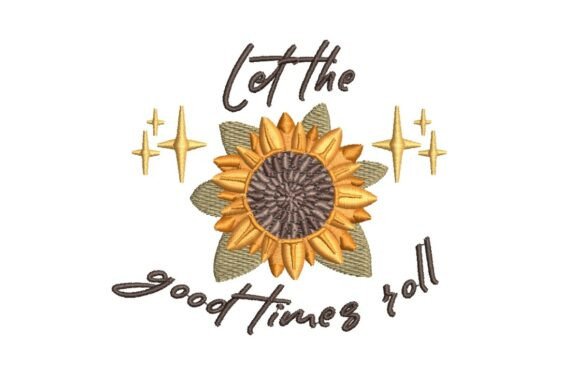
When we analyze this design, we aren't just looking at letterforms; we are looking at a composition. The central element is a dimensional sunflower. This isn't a flat, vector illustration. The design utilizes textured fills to create petals in rich golds and browns, resting against rustic, olive-green leaves. It has the depth you might expect from high-end packaging design but applied to fabric.
The text itself acts as a script font element, stitched in a flowing brown that mimics natural ink. This is crucial for brand identity work. If you are a small business owner selling artisanal goods or a crafter making custom gifts, you want typography that feels human. The "Let The Good Times Roll" phrase is integrated with golden starbursts, creating a layout that feels more like a logo design than a standard text block. It strikes a balance between a serif font stability and a sans serif font casualness, wrapped in a decorative textile aesthetic.
Strategic Applications for Creatives and Entrepreneurs
Understanding where to deploy this design is key to maximizing its value. For the graphic designer or content creator, this isn't just for embroidery hoops. While it excels on kitchen items, tote bags, and garden flags, the digital potential is vast. You can scan a high-resolution stitch-out to create realistic textures for social media graphics. It adds a layer of authenticity that digital-only design assets often lack.
For the entrepreneur or marketer, think about packaging design. If your brand sells organic products, home goods, or summer apparel, the "Let The Good Times Roll" design serves as a powerful visual anchor. It communicates warmth and optimism without needing to say much else. It works beautifully as a central motif for a t-shirt line or as a decorative patch on denim jackets. It is a versatile piece of inventory that bridges the gap between digital and physical products.
Readability, Hierarchy, and Emotional Resonance
In any design project, whether it is editorial design or web design, hierarchy is everything. This embroidery design handles hierarchy naturally. The sunflower is the primary focal point, drawing the eye immediately with its size and color contrast. The script text, positioned above and below, acts as the secondary information layer. This structure is similar to how a designer might use a bold display font for a headline and a lighter weight for the sub-header.
However, because this is a creative font rendered in thread, readability is handled differently than in print. The flowing script requires a certain scale to remain legible. You wouldn't use this for fine print on a business card. Instead, it is designed for impact. It influences brand perception by making the viewer feel a sense of nostalgia and cheer. It engages the audience through texture—the brain almost "feels" the stitching when looking at it. This sensory engagement is a powerful tool for brand identity, fostering a deeper connection than a standard digital typeface might.
Practical Guidance for Implementation
For those looking to integrate this into their workflow, treat it as you would a premium typeface. Here are some practical steps for evaluating the fit:
- Evaluate the Medium: This design is optimized for fabric. Ensure your stabilizer and thread weight match the density of the design. The "rich golds and browns" mentioned in the description require high-quality rayon or polyester threads to achieve that sheen.
- Check File Compatibility: Just as you would check a font license before using a commercial font, ensure the embroidery file format (PES, DST, JEF, etc.) matches your machine. This saves time in the digitizing process.
- Pairing with Other Elements: If you are placing this on a busy background, ensure high contrast. The olive-green leaves and brown text need a solid, light background (like natural canvas or white cotton) to maintain the visual hierarchy. If you are using this as part of a larger layout, pair it with simpler, sans-serif elements so the embroidery design remains the star.
- Scaling Considerations: Do not scale this design too small. The intricate details of the sunflower and the legibility of the script rely on a certain minimum size. Test stitch a small section if you plan to use it on smaller items like pocket squares.
Beyond the Hoop: Brand Consistency and Versatility
Consistency is the bedrock of professional design. Whether you are a blogger looking to merchandise your catchphrase or a small business owner building a product line, using a consistent visual element builds recognition. "Let The Good Times Roll" is more than a phrase; it is a mood. By using this specific embroidery design across multiple touchpoints—aprons for your bakery, staff t-shirts for your event, or tote bags for your customers—you create a cohesive brand identity.
It also serves as an excellent case study in font pairing. In a broader layout, you might pair a photo of this embroidered piece with a clean, geometric sans serif font for the surrounding text. The contrast between the organic, textured embroidery and the clean digital text creates a dynamic visual tension that is very much in line with modern typography trends.
Ultimately, this design offers real-world value. It solves the problem of how to add warmth and personality to physical goods. It is a practical tool that combines artistry with the technical requirements of production. For the designer or maker, it is a reminder that good design isn't always about the newest digital effect; sometimes, it's about the timeless appeal of a sunflower and a well-stitched sentiment.